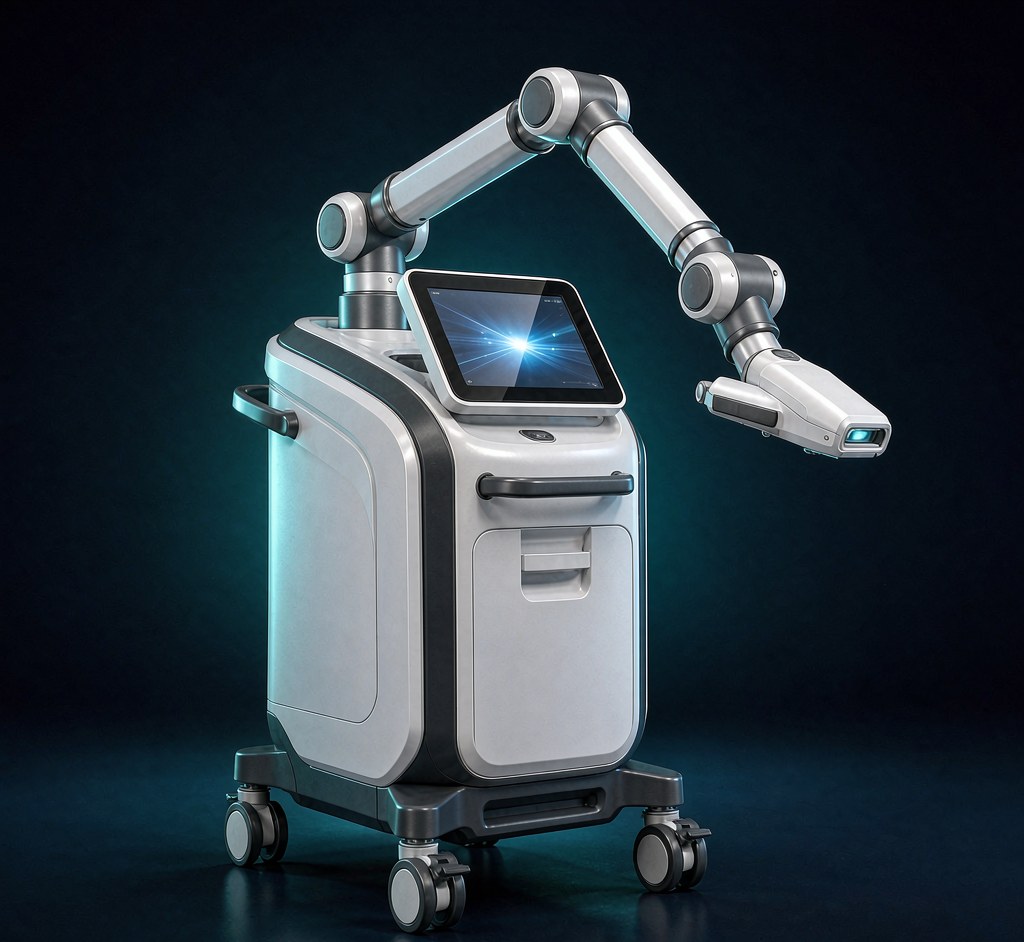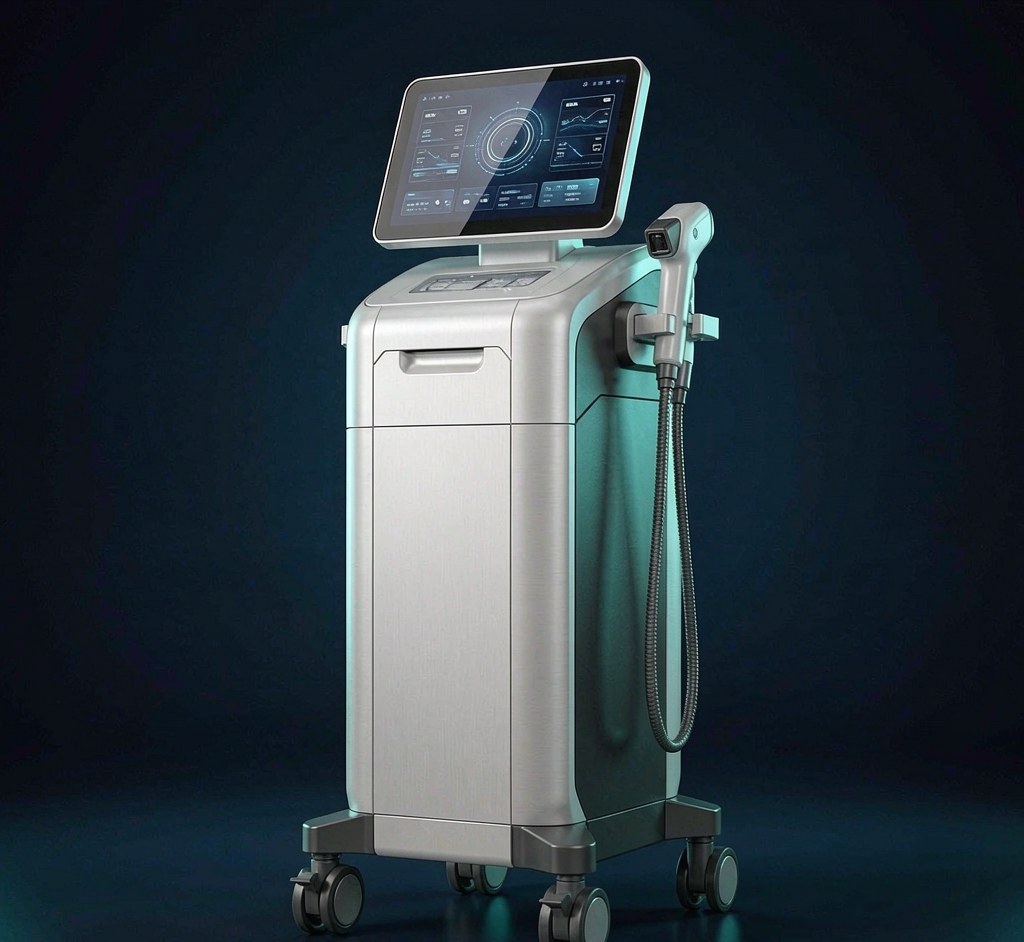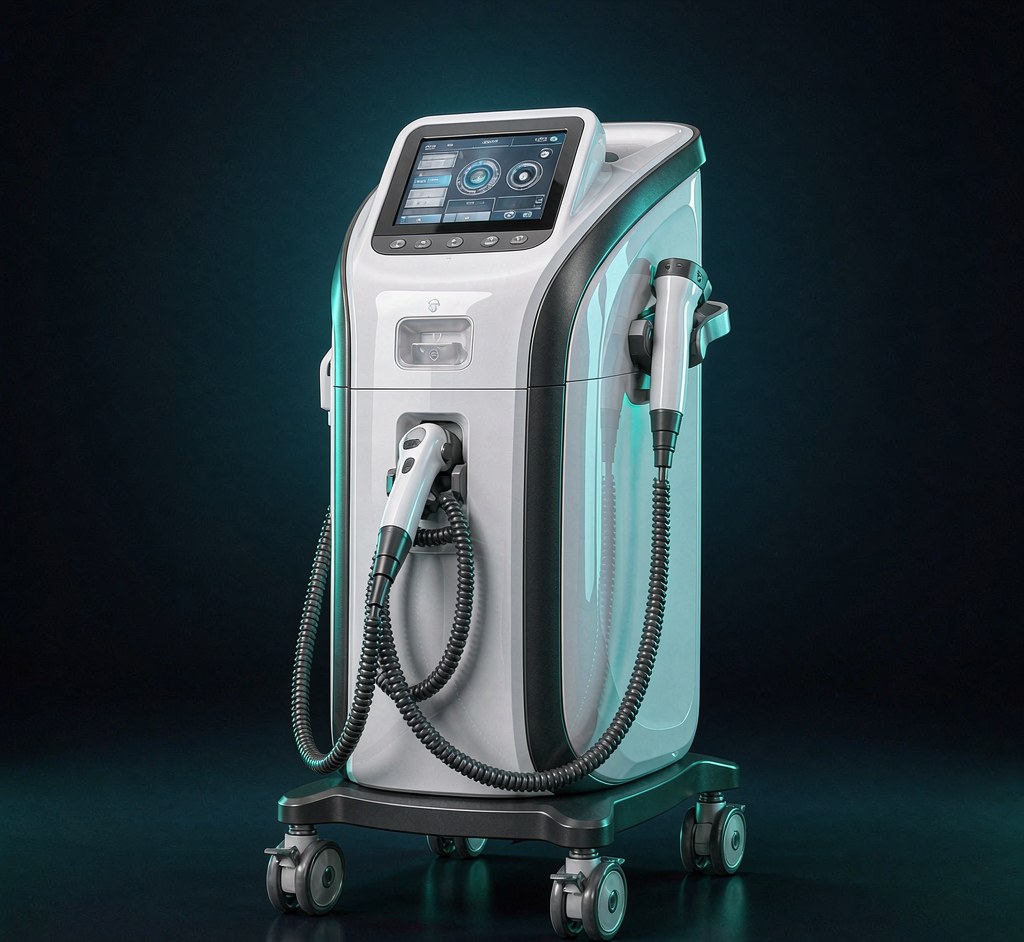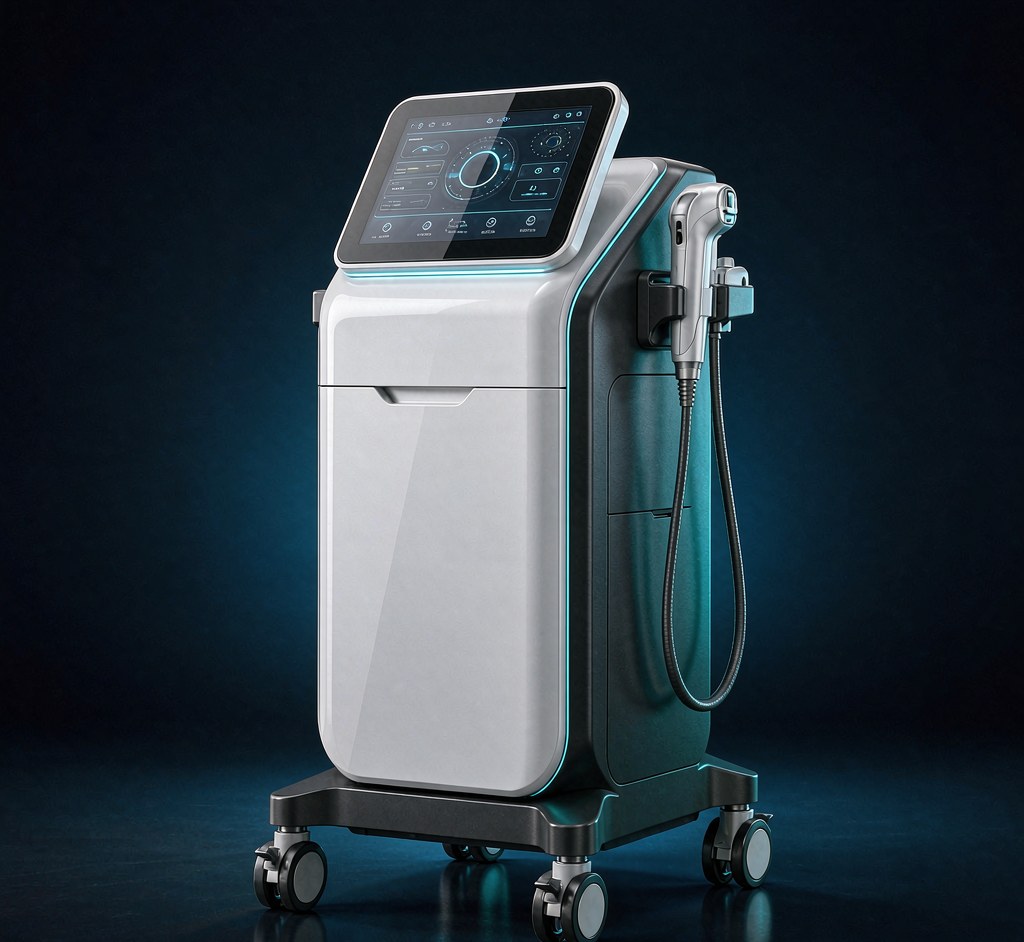
- They are not substitutes: HIFU heats at fixed focal depths (typically 1.5, 3.0 and 4.5 mm), RF microneedling delivers energy through insulated needles at a depth you set.
- HIFU sells lifting without downtime. RF microneedling changes pores, scars and texture. No single platform does both at therapeutic depth.
- Both are shot-limited consumable businesses. Cartridge and tip cost per session decides profitability, not the machine price you negotiate.
- Buy the platform your market will book in the first 90 days, then price the consumable before you price the machine.
Every few weeks a buyer sends us two quotations side by side — one HIFU machine, one RF microneedling machine — and asks which one is better. It is the wrong question, and it is the reason a lot of clinics end up with a device that sits under a cover. Both platforms are marketed as skin tightening, but they act at different depths, on different tissue, and they are sold with completely different consumable economics.
We build and export both. Here is how we would decide if the money were ours.
Two machines, two different jobs
HIFU, high-intensity focused ultrasound, converges ultrasound energy into a small focal point several millimetres below the surface and leaves the epidermis untouched. RF microneedling punctures the skin with fine needles and releases radiofrequency energy at a depth you set, then the needle retracts. One is a focusing problem. The other is a delivery problem.
| HIFU | RF microneedling | |
|---|---|---|
| Energy | Focused ultrasound at fixed focal depths | Bipolar or monopolar RF through needles |
| Where it acts | 1.5 mm, 3.0 mm and 4.5 mm cartridges; body cartridges deeper | 0.5 to 3.5 mm, adjustable per pass |
| Primary claim | Contraction and lifting of deeper supporting layers | Collagen remodelling, texture, pores, scars |
| Skin surface | Untouched, no wound | Micro-punctures, a controlled wound |
| Typical session | 30 to 60 minutes, one pass per area | 45 to 75 minutes including topical anaesthetic |
| Downtime | Usually none, or 24 hours of sensitivity | 1 to 3 days of redness and mild swelling |
| When results show | Some immediate tightening, peak at 8 to 12 weeks | Progressive over 4 to 12 weeks, usually a series of three |
| Consumable | Cartridge, shot-limited | Tip, shot or patient limited |
| Operator sensitivity | High — depth and acoustic coupling decide safety | Medium — depth and energy are set numerically |
| Regulatory framing | Often filed with lifting claims; confirm with your local authority | Often filed as an aesthetic resurfacing device; confirm locally |
Read the table again and notice what is missing: overlap. HIFU cannot remodel a pore. RF microneedling cannot contract tissue at 4.5 mm with therapeutic energy, whatever a brochure says. If your menu needs both jobs, one machine will not do both.
What HIFU actually does, and what it cannot
The selling point is depth without a wound. The transducer fires lines of focused energy, each line leaving a row of coagulation points at a fixed depth, and the tissue contracts while new collagen forms around those points. Because depth is set by the cartridge, the clinical decision is which cartridge, not which setting on a screen.
- 1.5 mm — superficial dermis. Fine lines, crepey texture, neck.
- 3.0 mm — deep dermis. Mid-face laxity, softening of the nasolabial fold.
- 4.5 mm — subcutaneous and SMAS level. The lifting cartridge, and the one buyers ask about first.
- Body cartridges — abdomen, arms, thighs, with deeper focal depths and different shot geometry.
What it cannot do: pores, acne scarring, pigmentation, or anything that needs surface remodelling. If that is your main case mix, the honest answer is a different platform — a CO2 fractional system for resurfacing or a picosecond platform for pigment, not a HIFU machine with a longer treatment menu printed on the box.
Two handpieces both described as 4.5 mm can still differ in focal volume and energy per line, and that difference shows up as either a comfortable treatment with visible lift or a painful one with swelling and no result. Our own HIFU face lifting platform is specified cartridge by cartridge for exactly this reason.
One honest note on claims: HIFU is not a facelift. It is a non-surgical tightening treatment whose best candidates are 35 to 55 with mild to moderate laxity. Sold to the wrong patient it produces disappointment, and disappointment travels faster than any brochure.
What RF microneedling actually does
RF microneedling is a wound plus heat, deliberately. Insulated needles enter to a set depth and deliver energy only at the tip, so the epidermis is spared while the dermis at that depth is coagulated. The result is collagen and elastin remodelling along the needle track, which is why it changes texture in a way HIFU does not.
- Depth is adjustable — typically 0.5 to 3.5 mm in 0.1 mm steps. That range is the real capability; anything less is a fixed-depth device with a marketing story.
- Insulation matters — insulated needles keep energy at the tip. Non-insulated needles heat the whole track including the surface, which means more pain and more downtime for the same clinical result.
- Needle count is not quality on its own — 36, 49 or 64 pins change coverage per pass and session time, not outcome per se. Energy consistency across pins is what you should be asking about.
- Feedback control — impedance sensing that cuts energy when resistance spikes is what stops a tip arcing on dry skin. Ask whether it exists and whether it can be demonstrated on a video call.
- Best indications — enlarged pores, acne and surgical scars, fine lines, laxity in thin-skinned areas, and combination protocols with topicals or PRP.
Downtime is real but predictable: redness for one to three days, mild swelling, and a requirement for sun discipline. That is a scheduling issue rather than a clinical one, but it does mean the treatment sells better as an autumn series than as a one-off in high season. Our gold RF microneedling machine is built around adjustable depth and tip-level feedback for that reason.
The number that decides the purchase: cost per session
Machine price is the number buyers negotiate. Consumable cost is the number that decides whether the treatment is profitable. Both platforms are shot-limited and neither resets for free.
This is the model we run through with buyers, with placeholders instead of our own prices — drop your quotation figures into it:
| Cost driver | HIFU | RF microneedling |
|---|---|---|
| Consumable unit | Cartridge, per area and per depth | Tip, per patient or per block of shots |
| Rated life | Often thousands of lines per cartridge — get the exact figure per depth | Often a few hundred to a few thousand shots per tip — get the figure |
| Full-face session consumes | 300 to 800 lines depending on protocol and area | One tip across one or two passes |
| Share of treatment price | Usually the larger share, and it scales with protocol | Usually the smaller, more predictable share |
| Can it be reused | No — shot counter and sterility both refuse | No, for patient safety |
| Where the money hides | Cartridges bought later at list price | Tip price creep and tip failure rate |
| What to lock in writing | Cartridge price with validity period and shipping terms | Tip price, lead time and failure replacement policy |
So the three questions are: what does one cartridge or tip cost landed in my country, how many sessions does it deliver at my protocol, and is that price held for a stated period? A HIFU machine quoted twenty percent cheaper with cartridges priced forty percent higher is the more expensive machine by month three. We have written about this pattern in why the cheapest quotation usually costs the most, and it applies unchanged here.
Which buyer should buy which first
- Med-spa with a lift-led menu, patients 35 to 55 — HIFU first. It sells as a no-downtime alternative, photographs well, and needs no anaesthetic workflow.
- Skin clinic already treating acne and scars — RF microneedling first. It extends what you already sell instead of opening a new patient conversation.
- Dermatology practice — RF microneedling first, with HIFU as the second platform for laxity patients you currently refer out.
- Distributor building a portfolio — both, but order HIFU with more cartridges than machines. Your dealers will reorder consumables long after the hardware sale closes.
- Brand owner doing private label — start with the platform whose consumable you can brand and stock. Hardware is a one-time sale; the consumable is the recurring revenue.
If you can only buy one and your market is genuinely mixed, buy the one whose treatment you can fill in the first ninety days. An idle machine earns nothing, however good its physics.
What to demand in the quotation
For HIFU:
- Cartridge list with focal depths and shot ratings written per cartridge, not a single high-capacity claim.
- Energy per line and line spacing range, plus whether the handpiece verifies acoustic coupling before firing.
- Shot counter behaviour — does it stop at the rated count, and can the user reset it?
- Cartridge price list with a validity period and shipping terms to your country.
- A live demo on a test phantom showing the focal pattern at each depth you are buying.
For RF microneedling:
- Needle count, insulation type and depth range stated in 0.1 mm steps.
- Tip rating in shots, and whether the machine enforces that rating.
- Impedance or temperature feedback, with a demonstration that energy is cut on dry skin.
- Energy consistency across pins — ask how they test it. A maker who cannot answer has not tested it.
- Tip price and lead time, plus what happens when a tip fails mid-session.
For both: ask which certificates ship with the unit and what scope they cover, then verify that scope with your own regulatory consultant. Certificate scope is the most misread document in this trade — we wrote a separate guide on CE, FDA and ISO claims for that reason.
Red flags we would walk away from
- HIFU sold with unlimited-shot cartridges at a low price — either the counter is defeated or the cartridge is not what it claims.
- RF microneedling quoted as monopolar through non-insulated needles with no feedback control.
- A single machine advertised as doing both HIFU and RF at therapeutic depth. Combination handpieces exist; simultaneous depth performance usually does not.
- Before and after photos with no treatment count, no interval and no patient age.
- Depth claims in millimetres on a handpiece that has no depth setting.
- The consumable price appears only after you ask twice.
Bottom line
HIFU and RF microneedling are not rivals. They are two products sold to two different patient groups inside the same clinic. HIFU sells lifting to people who will not accept downtime. RF microneedling sells skin quality to people who want their pores and scars addressed. Buy the one your market will book, price the consumable before you price the machine, and only then decide whether the second platform is a growth move or an expensive shelf ornament.
Send us your treatment menu, patient profile and target retail price and we will tell you which of the two we would put in room one — and if the honest answer is neither, we will say so. Our engineers answer sourcing questions directly at gaojiping@xhlmarketing.com, or start with the contact form.