- Wavelength decides who you can treat — 1064 nm is what makes dark skin safe, not more power.
- Cooling at the crystal (−25 °C to −30 °C) is the spec that predicts returns and complaints.
- The laser bar is the consumable: a 50-million-shot bar changes your five-year cost far more than the sticker price.
- Ask for the CE certificate, the energy-stability figure and a live demo before paying a deposit.
Diode laser hair removal machines are the single biggest revenue driver in most salons and clinics. They are also where first-time buyers lose the most money, because two machines that look identical on a trade-show table can differ enormously in laser bar quality, cooling capacity and lifespan.
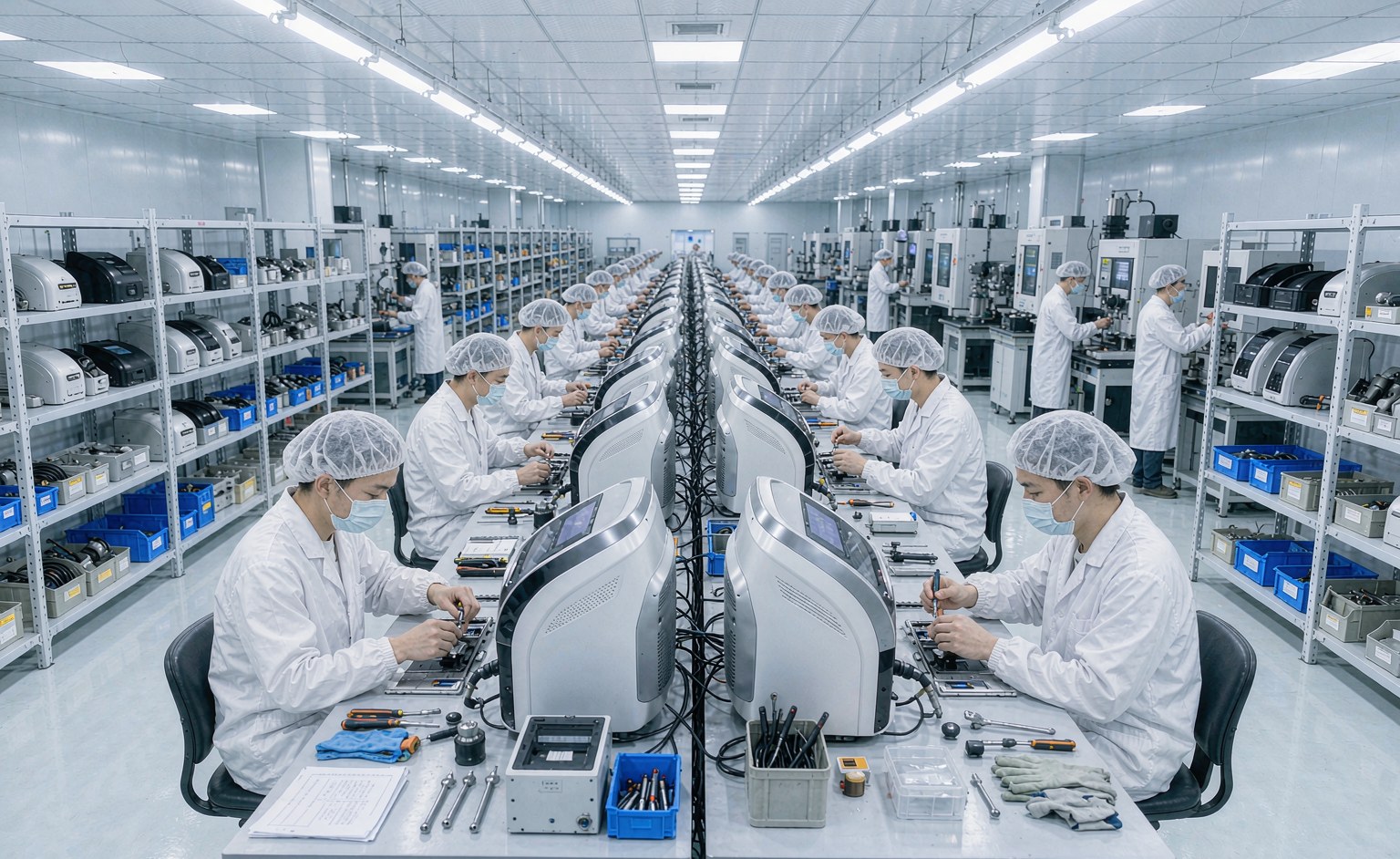
This guide covers the seven decisions that determine whether your machine earns money for five years or becomes an expensive ornament. It is written from the factory floor, not from a sales brochure.
1. Wavelength: one, three or four?
The wavelength determines who you can treat:
- 755 nm — strongest melanin absorption. Best for light skin (Fitzpatrick I–III) and fine hair.
- 808 nm — the classic "gold standard". Balanced depth and absorption; works on most skin types.
- 940 nm — coagulates microvessels around the follicle, starving hair of nutrient supply and reducing regrowth.
- 1064 nm — deepest penetration, lowest melanin absorption. Safest choice for dark skin (V–VI) and tanned clients.
A single-wavelength 808 nm machine is the cheapest and still effective. But a 4-wavelength machine lets one device safely serve every client who walks in — which is why it has become the default choice for serious clinics. Our 4-wavelength DL-D20 was built around exactly this logic.
2. Power output — bigger is not automatically better
Output power ranges from about 300 W to 2400 W. Higher power means faster treatments on large areas, but it is meaningless without matching cooling and a quality laser bar. A stable 600 W machine with a USA-imported bar will outperform a poorly made 1200 W machine in clinical results and lifespan.
What matters is energy density at the skin (J/cm²) and how consistently the machine holds it. Ask the supplier for the actual energy stability figure, not just the peak wattage.
3. Cooling: the difference between painless and painful
Cooling is the single most under-specified feature. Look for sapphire contact cooling reaching −25 °C to −30 °C at the crystal, combined with TEC semiconductor plus water plus air refrigeration. This is what lets you run all-day sessions without the handpiece overheating and without clients flinching.
Machines with weak cooling are the ones that get returned. Ask specifically about crystal temperature and continuous working time.
4. Spot size and treatment speed
Larger spots (12×30 mm, 12×36 mm) treat legs and backs dramatically faster. Interchangeable spot sizes — plus a small tapered tip for the face and toes — give one machine full-body coverage. Confirm the spots are genuinely interchangeable and not fixed to one handpiece.
5. Handpiece lifespan: the real cost driver
The laser bar is the consumable. Cheap bars degrade quickly and lose energy after a few hundred thousand shots. Quality USA or German bars are rated for 50 million shots. Over five years, the difference in replacement cost dwarfs the initial price gap between a cheap and a good machine.
6. The interface and presets
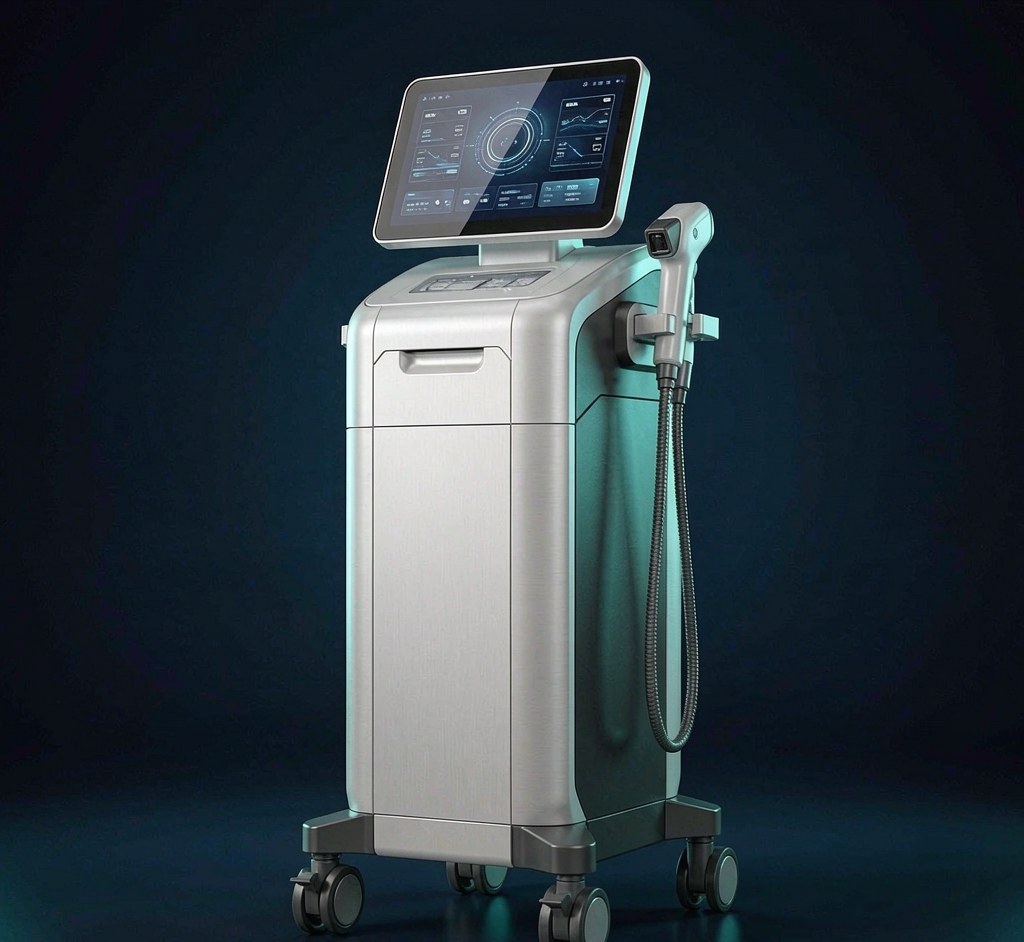
A 15.6-inch touchscreen with skin-colour, body-part and gender presets is not a gimmick. It reduces training to an afternoon and prevents the operator errors that cause burns and complaints. Also confirm the interface language can be customised for your market.
7. Certificates, warranty and after-sales
Before paying a deposit, ask for:
- CE certificate and LVD/EMC test reports (not just a logo in a brochure)
- ISO 13485 factory certification
- Warranty terms — 2 years is the standard for quality machines
- Spare parts availability and whether remote technical support is free
If a supplier hesitates on any of these, that hesitation is your answer.
The 7 questions to ask before you wire money
- What is the laser bar origin and rated shot count?
- What crystal temperature does the cooling reach?
- Which wavelengths are included, and are spot sizes interchangeable?
- What is the energy stability figure (±%)?
- Can I see the CE certificate and test reports?
- What is the warranty, and what is not covered?
- Can I get a live video demonstration before ordering?
Bottom line
Buy on the laser bar, the cooling and the after-sales — not on the appearance of the housing. A factory-direct supplier with a real production line will answer all seven questions without hesitation, invite a video inspection, and stand behind the machine for years. If you would like a second opinion on a quote you have received, send it to our engineers — we will tell you honestly what is good and what is missing.