- Choose the configuration from the treatments you plan to sell, not from the wattage on the cover page — fractional resurfacing, surgical cutting and gynaecology each pull the spec in a different direction.
- The tube is the most expensive component in the box. Ask for its type, brand and rated service life in writing before you compare prices.
- Power only matters with stability and delivery: a stable 60 W sealed emitter with a proper 7-joint arm will out-treat a drifting 80 W glass tube in every case that pays.
- If pigmentation, not texture, is your main case, CO2 is the wrong first machine — start with a picosecond or Nd:YAG platform instead.
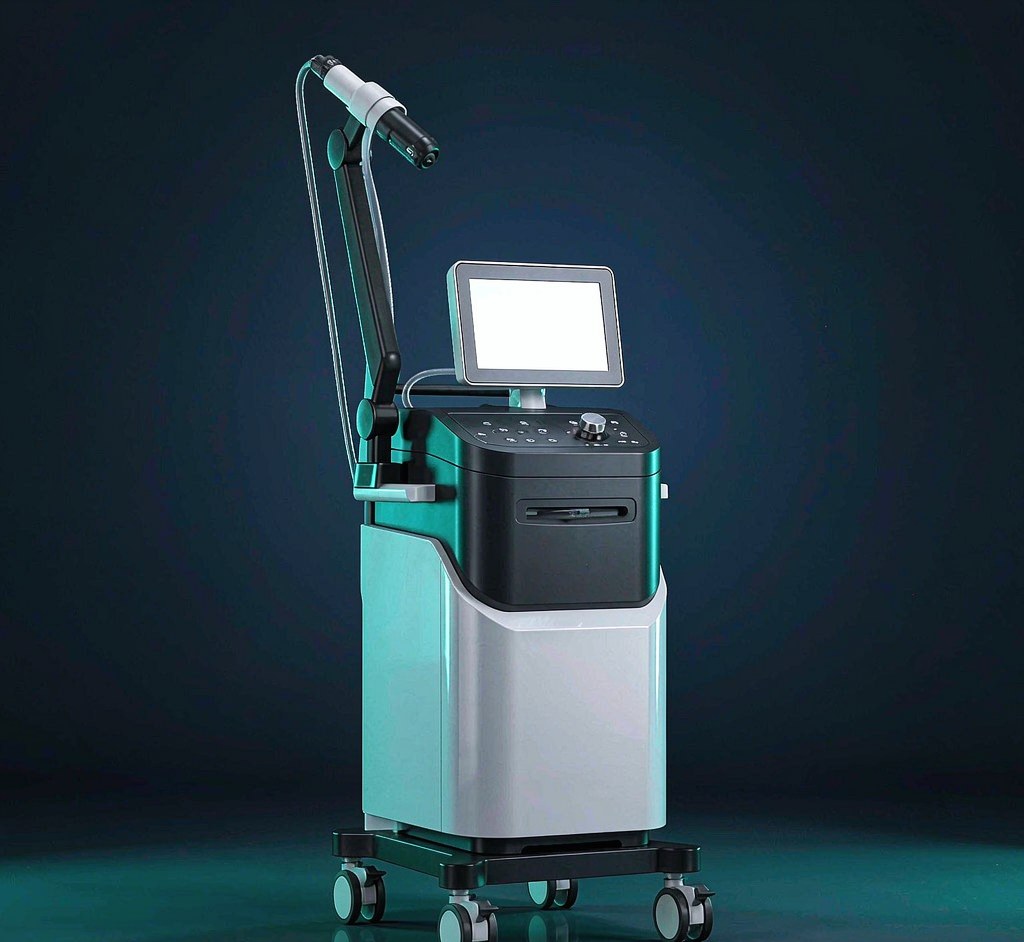
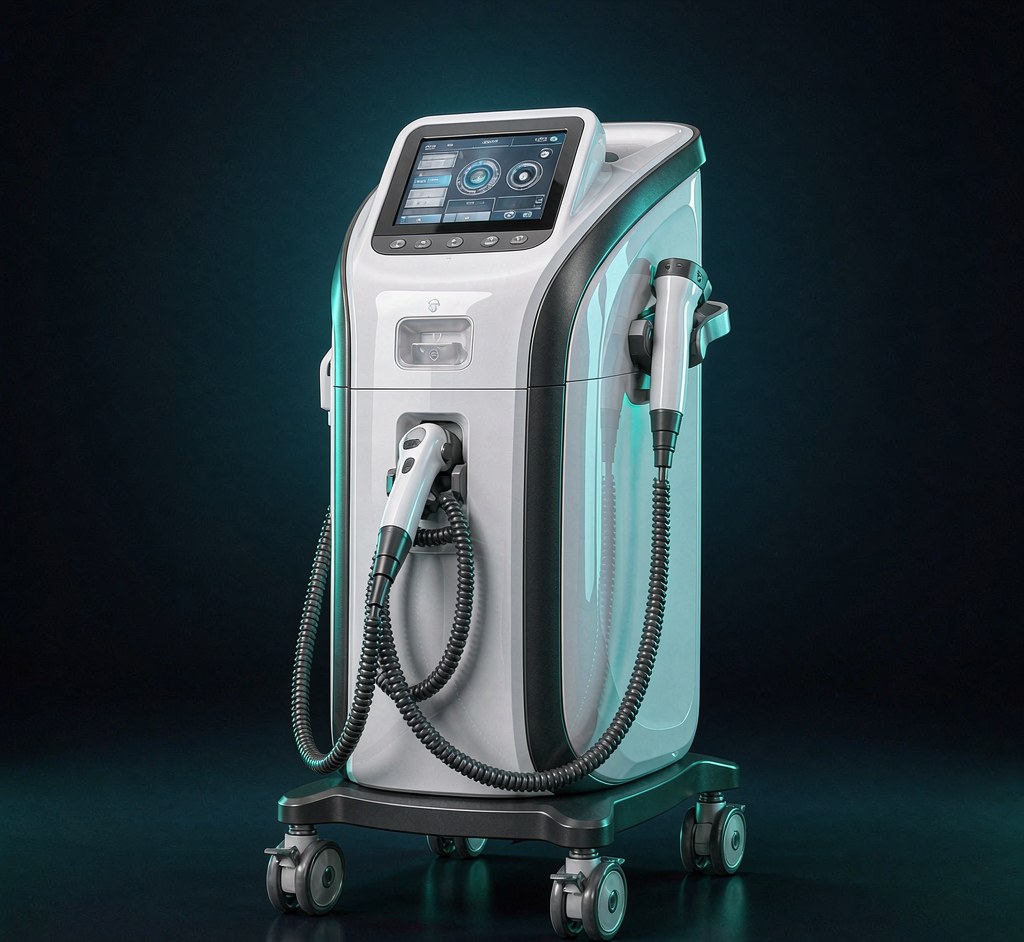
CO2 fractional laser at 10600 nm has been the workhorse of skin resurfacing for two decades, and it still carries some of the highest per-session margins on a clinic menu. It is also the category where configurations diverge the most. Two listings that both advertise a CO2 fractional laser machine can differ by an order of magnitude in tube type, delivery optics and the treatments they can actually perform — while looking nearly identical in a product photo.
We assemble these platforms at the factory, and the question we get most from buyers is not which brand but which configuration: how much power, which tube, what kind of arm, which modes. Those four decisions decide what you can treat on day one and what the machine will cost you in year three. This guide walks through them the way we would if you were standing on our floor.
Start with the treatments you plan to sell
Configuration follows the treatment menu, never the other way round. Before comparing any spec sheet, write down what you intend to offer:
- Fractional resurfacing — acne scars, wrinkles, uneven texture, enlarged pores, stretch marks. The core use, and the one every configuration supports.
- Surgical cutting — mole removal, skin tags, warts, small lesions. Requires a true continuous-wave or super-pulse mode with a surgical handpiece, plus enough power to cut cleanly.
- Gynaecological protocols — vaginal tightening and rejuvenation. Requires dedicated probes, specific scan patterns, and certification that your market accepts.
- Scar and burn revision — deeper, more parametric work that benefits from adjustable spot size and stable high energy.
A salon that will only ever do texture work is over-served by a 60 W surgical platform and under-served by nothing. A dermatology department that also removes lesions weekly is under-served by a fractional-only box. Be honest about the menu — it is the cheapest configuration consulting you will ever get.
One caveat from experience: if pigmentation, tattoos or dull skin — rather than scars and texture — are the cases walking through your door, CO2 is the wrong first machine. You would be better served by a picosecond laser platform, and resurfacing can come later. And if you want texture improvement with no downtime at all, that is a different purchase: see our RF microneedling machine for the non-ablative route.
The laser tube: the most expensive component in the box
The tube (or emitter) is where the 10600 nm beam is generated, and it is the single most expensive thing inside the chassis. Three classes exist in the market:
| DC-excited glass tube | RF-excited metal tube | Sealed premium emitter (Coherent class) | |
|---|---|---|---|
| Machine price effect | Lowest — common in entry listings | Mid to high | Highest |
| Power stability | Drops as the tube heats through the day | Good through full clinic days | Very stable; a serious maker will quote a figure (ours is within ±3%) |
| Service life | Shortest; usually the first component replaced | Long; rarely replaced in a normal clinic cycle | Rated in decades at clinical duty cycles |
| Replacement | Cheap part, recurring cost and downtime | Infrequent | Effectively a machine-life part |
| Fits | Fractional-only salons on tight budgets | Busy skin clinics | Hospitals, dermatology, surgical and gynae work |
The trap is that none of this appears on the listing. Most price gaps between two similarly specified CO2 machines are, in reality, tube gaps. So the question to send any supplier is simple: which tube class, which brand, what rated service life, and what does an out-of-warranty replacement cost? Get it in writing. If you want to know why we push this so hard, it is the same logic as the diode bar question — the light source is the machine. Our own CO2 fractional laser system is built on a 60 W American Coherent emitter precisely because we did not want to sell the cheap-tube version twice.
Power: what 30, 40 and 60 W actually change
CO2 machines are commonly offered from roughly 30 W upward. Here is what the number buys:
- 30–40 W — sufficient for fractional resurfacing at standard densities. Perfectly usable for a texture-only menu.
- 40–60 W — deeper fractional passes with shorter dwell, and enough headroom for genuine CW cutting. This is the class most derm clinics end up in.
- 60 W and above — full surgical capability plus gynae protocols without compromise; the power budget covers all modes at once.
Two things matter more than the headline figure. First, power stability: a tube that drifts 10% as it warms up will make your treatment results inconsistent across a clinic day, and no client will tell you why. Ask for the stability figure, not the peak. Second, mode sharing: on fractional-only machines the whole power budget feeds one mode; on multi-mode platforms, cutting and gynae modes consume it too. A 30 W multi-mode machine often cuts worse than a 30 W fractional-only one — the budget is being divided.
And note what power does not buy: penetration depth at 10600 nm is fixed by physics and water absorption in tissue. Higher power does not make the beam go deeper; it lets you work faster and cut better. Anyone selling you watts as depth is selling you something else.
The articulated arm and the scanner
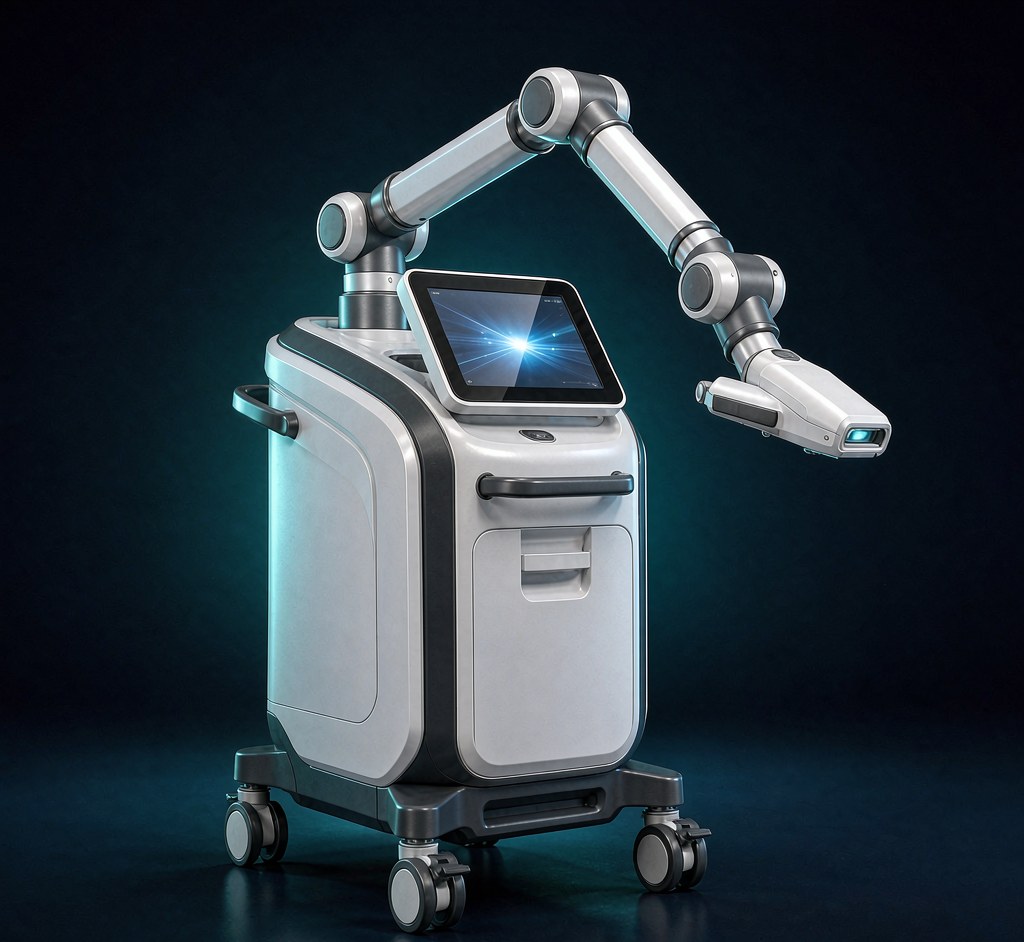
CO2 energy at 10600 nm is delivered through mirrors, not fibres — which makes the delivery system a mechanical precision component, not an accessory. What to look for:
- Articulated arm quality. A 7-joint arm lets the operator reach any treatment angle without repositioning the patient. More importantly, ask for the optical path offset spec — on our platform it is below 0.5 mm — because a misaligned arm loses energy and creates hot spots at the skin.
- Energy stability through the arm. Every mirror junction is a place to lose power. A figure above 95% transmission is what we consider acceptable.
- Spot size range. Fractional work needs fine microbeams (100–400 µm range); surgical cutting needs larger focused spots. An adjustable range such as 100–2000 µm lets one delivery system serve both.
- Scan patterns. Square, circle, triangle, line and custom shapes are not cosmetic features — pattern choice controls thermal bridging and recovery time. A random or scatter mode is genuinely useful for reducing overtreatment lines.
Check the arm physically on a video demo: move it through its full range and watch the beam footprint on a test block. An arm that loses alignment mid-range will never be fixed by software.
Mode sets: fractional, surgical, gynaecology
Modes are where the configuration decision becomes concrete. A quick mapping of the four buyer profiles we see most often:
| Your business | Tube class | Power | Modes you need | Watch out for |
|---|---|---|---|---|
| Salon / med-spa, texture menu | RF metal or glass, budget-dependent | 30–40 W | Fractional only | Do not pay for modes you will never switch on |
| Skin clinic | RF metal or sealed emitter | 60 W | Fractional + CW cutting + SP | Power stability figure; arm offset spec |
| Hospital / dermatology dept. | Sealed premium emitter | 60 W | Fractional + surgical + scar protocols | Documentation for tender and licensing |
| Women's health centre | Sealed emitter | 60 W | Gynae + vulva modes, dedicated probes | Probe supply, local regulatory acceptance |
If you sit between two rows, buy the configuration of the row above the one you hope to be in next year — upgrading a tube class later costs more than choosing it now, and the arm does not change.
Six questions to ask any CO2 supplier before you pay
- Which tube class and brand is installed, and what service life does the maker rate it for at clinical duty cycles?
- What is the power stability figure across a full working day — not the peak output, the stability?
- Arm specs: how many joints, what optical path offset, what energy transmission figure?
- Which modes are included in the base price — and are the gynae probes or surgical handpieces sold separately?
- What does an out-of-warranty tube replacement cost, including shipping to my country?
- Can I see a live video demo of the exact configuration you are quoting — fractional pass, a cut, and a scan-pattern change on the same unit?
Question five is the one buyers skip, and it is the one that changes the total cost of ownership the most. A cheap machine with an expensive consumable tube is a lease, not a purchase — the same arithmetic we covered in our piece on why the cheapest quotation costs the most.
Red flags we would walk away from
- The tube is described only as imported, with no brand and no class named.
- Power is quoted as a peak figure with no stability spec anywhere in the offer.
- A fractional-only machine is advertised as capable of surgical cutting.
- Scan patterns exist only as screenshots in a brochure — never shown live.
- The supplier will not quote a replacement tube price until after you have paid.
- The demo video is of a different model from the one on the quotation.
None of these means the machine is fake. It means the configuration is not what the listing implies, and the gap will surface in your first year of operation.
Bottom line
A CO2 fractional laser machine is four decisions, not one purchase: tube class, power, arm, mode set. Choose them from the treatments you will actually sell, demand the tube and arm specs in writing, and price the replacement tube before you price the machine. If you send us your treatment menu and country, our engineers will reply with the configuration we would run in your position — and if the honest answer is that you need less machine than you asked for, we will tell you that too. Start here or write directly to gaojiping@xhlmarketing.com.