- A price gap of 30–40% between two quotes with the same headline wattage is almost never margin — it is components and testing that one document left out.
- Wattage is the least useful number on the page. Ask for fluence at the handpiece window, in J/cm², at the spot size you will actually use.
- The real comparison is cost per delivered treatment hour: purchase, parts and downtime divided by the hours the machine actually runs.
- Never cut cost on the laser source, the cooling loop, the handpiece or after-sales response. Everywhere else, the budget option is often correct.
Two quotations land on the same morning. Both are for a "1200 W diode laser hair removal machine, 4 wavelengths". One comes back at USD 4,900, the other at USD 8,200, same Incoterm, same delivery window. The instinct is to conclude that the second supplier is greedy, or that the first one has simply found a cheaper supply chain.
Neither is usually true. The gap between those two documents is not margin — it is a list of components that one of them did not include, and a set of tests that one of them does not run.
We build these machines, and we lose orders to quotes like the first one, so this is not going to be a sermon about how cheap is always bad. Some inexpensive machines are genuinely good value. But when two quotes claim the same specification and differ by 40%, the specifications are not the same. You will pay the difference later, in a currency you did not budget for: downtime days, handpieces, air freight on a forty-dollar part, and treatments you have to refund.
Where the price difference actually lives
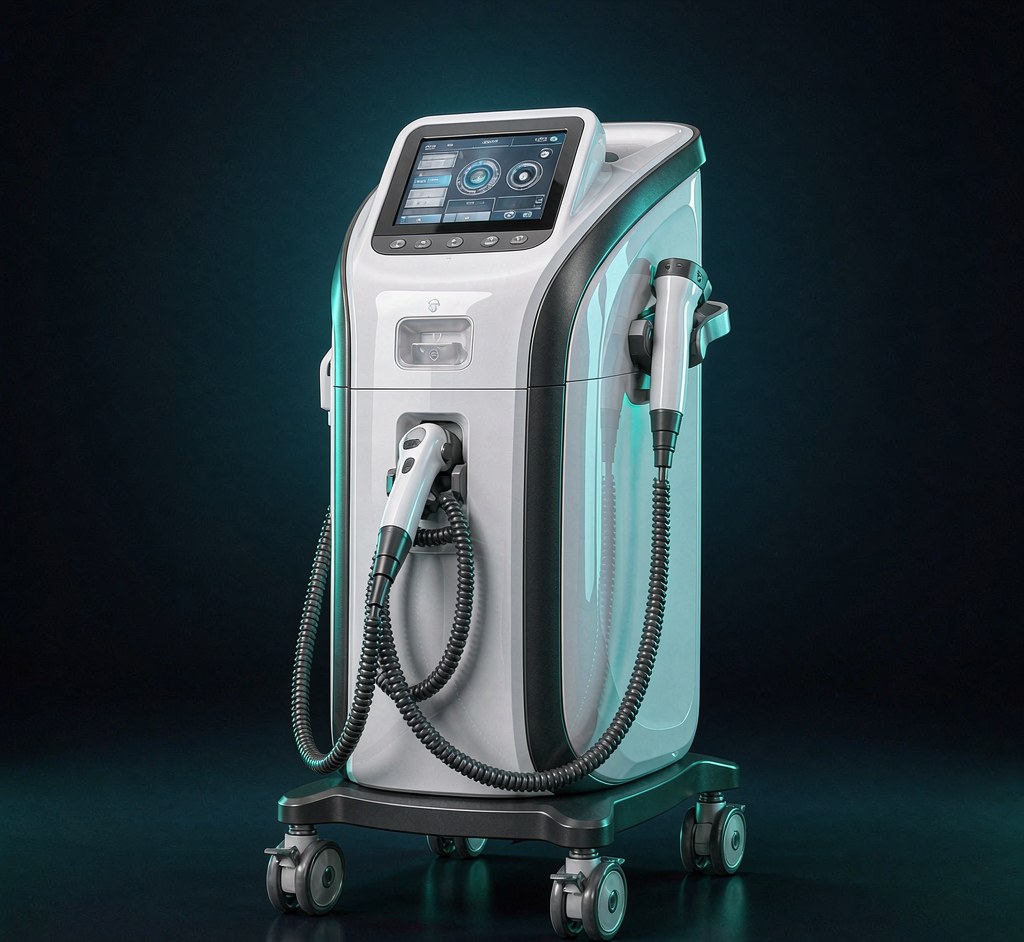
A laser machine is not one product. It is seven subsystems sharing a chassis: the laser source, the optical path and handpiece, the cooling loop, the power supply and capacitor bank, the safety chain, the mechanical build, and the testing regime before packing. The headline wattage describes the first of those, and even then only loosely.
These are the lines where a quote quietly loses its cost. We have opened enough machines from other factories to recognise the pattern immediately.
| Line | What the cheapest version does | What you notice, and when | How to check before you pay |
|---|---|---|---|
| Laser source | Generic diode stack, often 808 nm only, binned by price rather than by wavelength | Output falls over 12–18 months; weaker results on darker skin types because the 755 nm and 1064 nm channels are thin or missing | Ask for source brand, model and wavelength set in writing, plus a power measurement at the handpiece, not at the source |
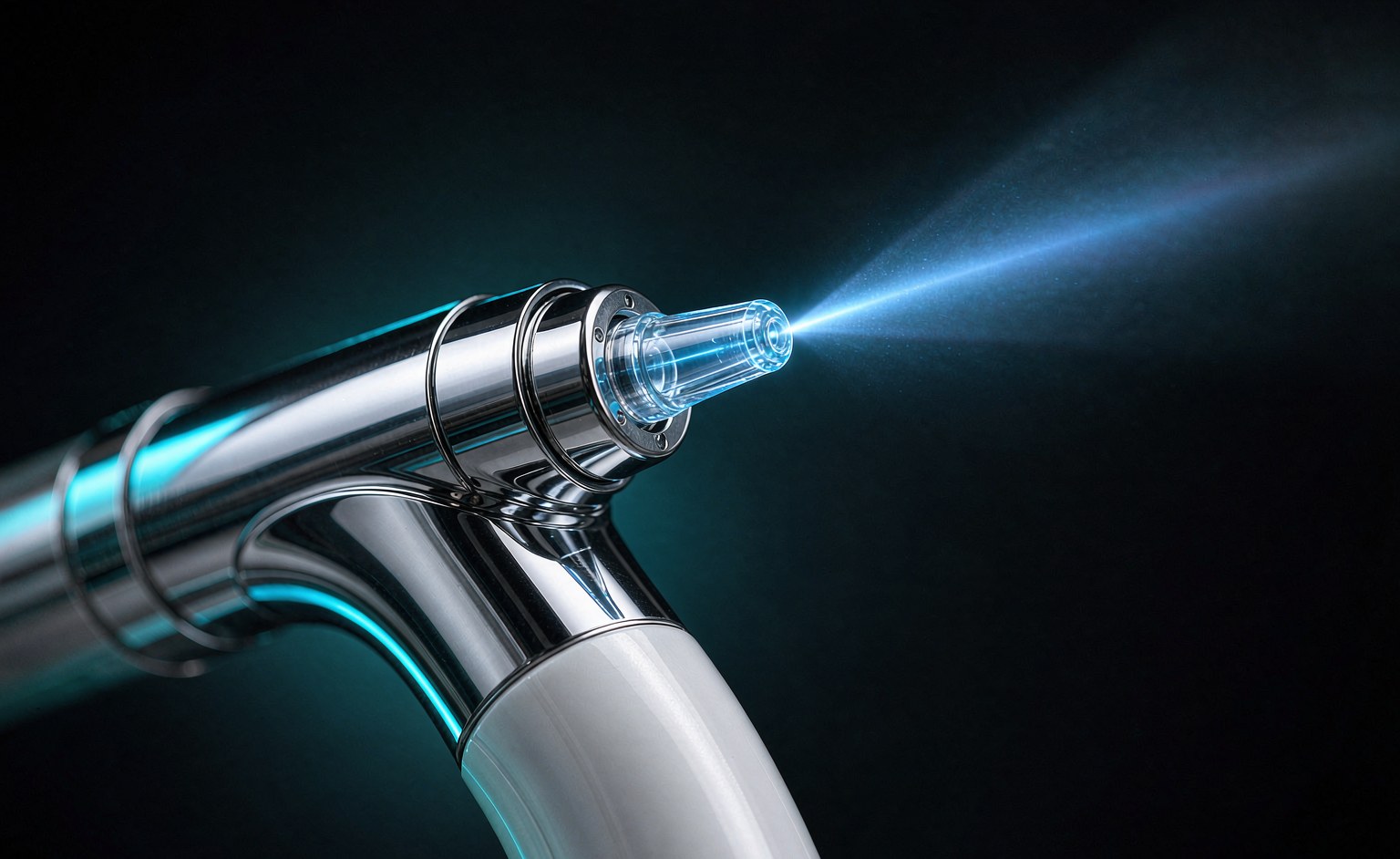
| Handpiece and optics | Thin sapphire window, uncoated lenses, plastic nose cone | Spot size drifts, energy at the skin sits below the displayed value, replacement every few months | Ask for measured fluence at the handpiece exit for each spot size, and the price of a spare handpiece |
| Cooling | Smaller compressor, undersized radiator, no flow or temperature sensor | Derating or shutdown after 20–30 minutes in a warm room — usually on your busiest day | Ask for compressor rating, tank volume and continuous-duty data at 30 °C ambient |
| Power supply and capacitors | Unbranded PSU, capacitors sized at the minimum | Pulse instability, error codes, capacitor replacement inside two years | Ask for the PSU brand and capacitor bank rating, and what the unit does at 10% low mains voltage |
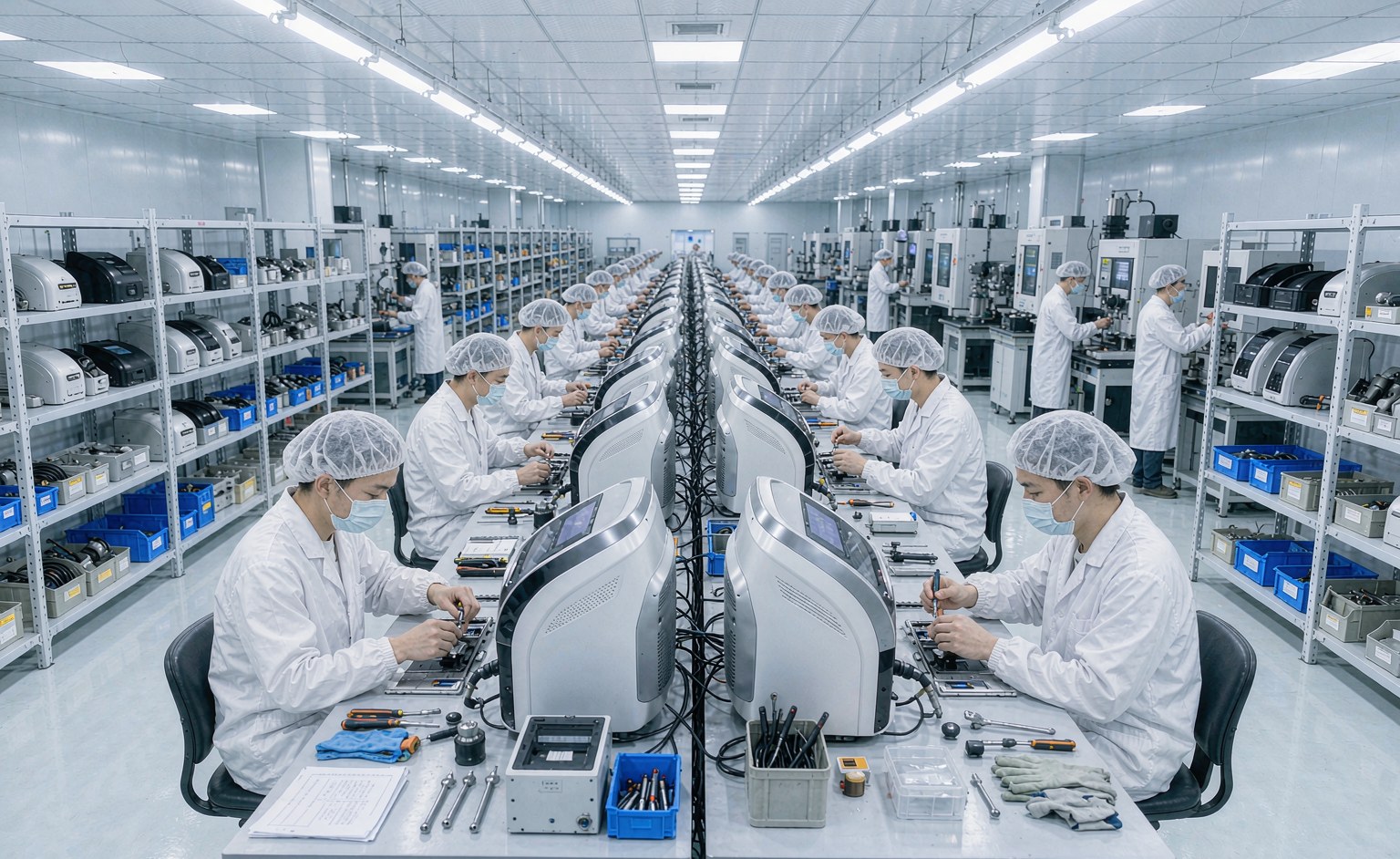
| Ageing and QC | Straight off the line after a ten-minute power-on | Higher dead-on-arrival rate, early handpiece failures, the first week of surprises | Ask how many hours of burn-in before packing, and for the test sheet of your serial number |
| Safety chain | Bridged interlocks, no independent over-temperature cutout, key switch omitted | A compliance problem at your border, and a liability problem if a client is injured | Ask for the wiring diagram and a photo of the interlock circuit, then test it yourself on arrival |
| Packing and spares | Single-wall carton, no moisture barrier, no parts held in stock | Crushed frame, condensation on optics, six-week waits for a small part | Ask for the packing specification, the spare parts price list and what is actually on the shelf |
One of these is a question to ask. Five of them in the same document is a different machine wearing the same spec sheet.
The wattage deserves its own warning. On a 4-wavelength diode platform, "1200 W" can mean optical power at the stack, electrical input, or the number printed on a sticker. What matters clinically is the fluence delivered at the handpiece window, at a spot size you will actually use, after the fiber and optics have taken their share. Ask for that number in J/cm² and watch how the conversation changes.
The same 1200 W diode, quoted two ways
Put the two documents side by side and the difference stops being abstract. This is the pattern we see most often:
| Line | Bargain quote | Written-spec quote |
|---|---|---|
| Wavelengths | 808 nm dominant, 755 nm nominal | 755 / 808 / 1064 nm with measured output per channel |
| Power reference point | "1200 W" on the cover page | 700 W optical at stack, fluence stated at handpiece |
| Handpiece | One, no spare, no price published | Two, sapphire window, spare priced in the quotation |
| Cooling | Compressor "1 HP class", no duty rating | Rated continuous at 30 °C ambient, flow sensor fitted |
| Burn-in | Not mentioned | 48 hours, test sheet per serial number |
| Warranty | 12 months, "excluding consumables and freight" | 12–24 months, source covered, freight terms stated |
| Spare parts | On request | Price list and lead times attached |
Nothing in the right-hand column is exotic. It is simply the part of the specification that costs money and therefore disappears first when a factory is asked to hit a price.
The bills that arrive after the invoice
The purchase price is one line in a three-year cost. The rest arrives later, in this order:
- Downtime on a booked day. A diode machine down for a week in a clinic running six days a week is thirty to forty cancelled appointments, plus the clients who do not rebook.
- The second handpiece. On a cheap build the handpiece is a consumable in disguise. Two or three replacements a year can erase the entire saving, and they always fail during a course of treatment rather than between them.
- Freight on warranty parts. "Warranty" that excludes shipping turns a forty-dollar pump into a two-hundred-dollar problem and a three-week wait. Read who pays both directions.
- Staff time. Rescheduling, apologising, re-doing a patch test, learning a different interface because the replacement unit is a different revision.
- Refunded or discounted treatments. When output drifts, results thin out. Clients do not complain about the machine; they complain about you.
- Compliance re-test. If the unit fails a safety or EMC check at your border, the cost is not the test — it is the storage, the return freight and the months.
There is a single number that captures all of this, and it is the only one worth comparing: cost per delivered treatment hour. Take everything you will spend over three years — purchase, freight, parts, downtime at your own revenue per hour — and divide it by the hours the machine actually delivers. A unit that costs 40% more but runs 95% of its booked hours almost always wins that calculation against one that spends a fortnight a quarter in the corner.
When the cheap machine is the right buy
We would rather you spent less where less is appropriate. There are cases where the budget option is correct:
- Devices where a failure costs a session, not a client. A hydro facial machine or a skin analyzer going down is an inconvenience. A laser delivering unpredictable fluence is a burn risk.
- A backup unit for a model you already run. You know the failure modes, you hold the parts, and it only has to work on overflow days.
- Testing demand in a new market. Buy one modest unit, prove the treatment sells, then buy the good one with the revenue.
- A discontinued model being replaced — provided the factory still stocks consumables and will put that in writing with a timeline.
What should never be bought cheap: the laser source, the cooling loop, the handpiece, and the person who answers the phone when it breaks. Those four decide whether you own a treatment business or a repair project. The same logic applies to a CO2 fractional system, where tube quality and cooling matter even more than they do on a diode.
Put every supplier on the same sheet
Most price comparisons are meaningless because each supplier answered a different question. Send the same RFQ, with these eight items, and refuse to evaluate a quote that leaves any of them blank:
- Source detail: brand, model, wavelength set, and the reference point for the power figure.
- Delivered fluence: J/cm² at the handpiece window, for each spot size you will use.
- Cooling duty: compressor rating, tank volume, maximum ambient for continuous operation.
- Burn-in: hours before packing, plus the test sheet for your serial number, not a generic one.
- Warranty mechanics: what is covered, who pays freight each way, response time, and whether source and handpiece are inside it.
- Spare parts: prices and lead times for the ten parts most likely to fail, including a handpiece, a water pump and filters.
- Packing spec: crate type, foam, moisture barrier, and the HS code exactly as they will declare it.
- Documents shipped with the unit: test report, packing list, certificate of origin, manual in your language.
Then score rather than rank. Give weight to the things that stop production — source quality, cooling, parts availability, response time — and very little to the sticker price. A twenty-dollar difference in unit price between two quotes is noise. A two-week difference in spare parts lead time is not. If you are comparing Nd:YAG options as well, the same sheet works for a Q-switched Nd:YAG system.
Bottom line
The cheapest quotation is not a discount. It is a bet that nothing in the missing column will ever matter, placed with your money and your clients' skin. Sometimes that bet pays. Usually it does not, and the invoice for the difference arrives in the second year, when you are busiest and least able to argue.
Compare on delivered fluence, cooling duty, parts availability and warranty mechanics — not on the number at the bottom of page one. If a supplier cannot answer those four in writing, that is your answer.
If you want a line-by-line breakdown of what is inside one of our machines, and where we chose not to cut, ask us. Email gaojiping@xhlmarketing.com with the competing quote or the spec you are working from, and we will mark it up honestly — including the parts where the cheaper supplier is fine. You can also send us your RFQ and we will reply on the same eight points.